
The rules for selling online in Europe are shifting again. Also, the June 2026 EU consumer protection changes bring a new focus on clarity, fair treatment, and making buyer rights easy to use.
If you run an online shop, you do not need to read hundreds of pages of law. Instead, this guide breaks down the most important updates in plain language, so you know what is changing and what to do about it.
Also, the most important thing to grasp upfront is that these changes are not random. They follow a clear pattern that has been building for years.
The EU keeps closing the gap between what online shops promise and what buyers actually get. Once you see that direction, the rules start making sense as parts of one simple goal.
What This Guide Covers:
1. The Big Picture
Overall, EU policy keeps moving in one direction: protect buyers and cut the gap between what shoppers are promised and what they get.
These 2026 EU Withdrawal Button compliance are less about new ideas and more about enforcing fairness that already exists on paper.
Core Themes:
- Make buyer rights easy to use, not just available.
- Increase clarity around pricing and policies.
- Reduce friction in returns and cancels.
- Hold all sellers to the same standard, regardless of size.
In fact, many of these ideas are not new. What is new is the push to make them work in real shops, not just on paper.
2. The Withdrawal Button Push
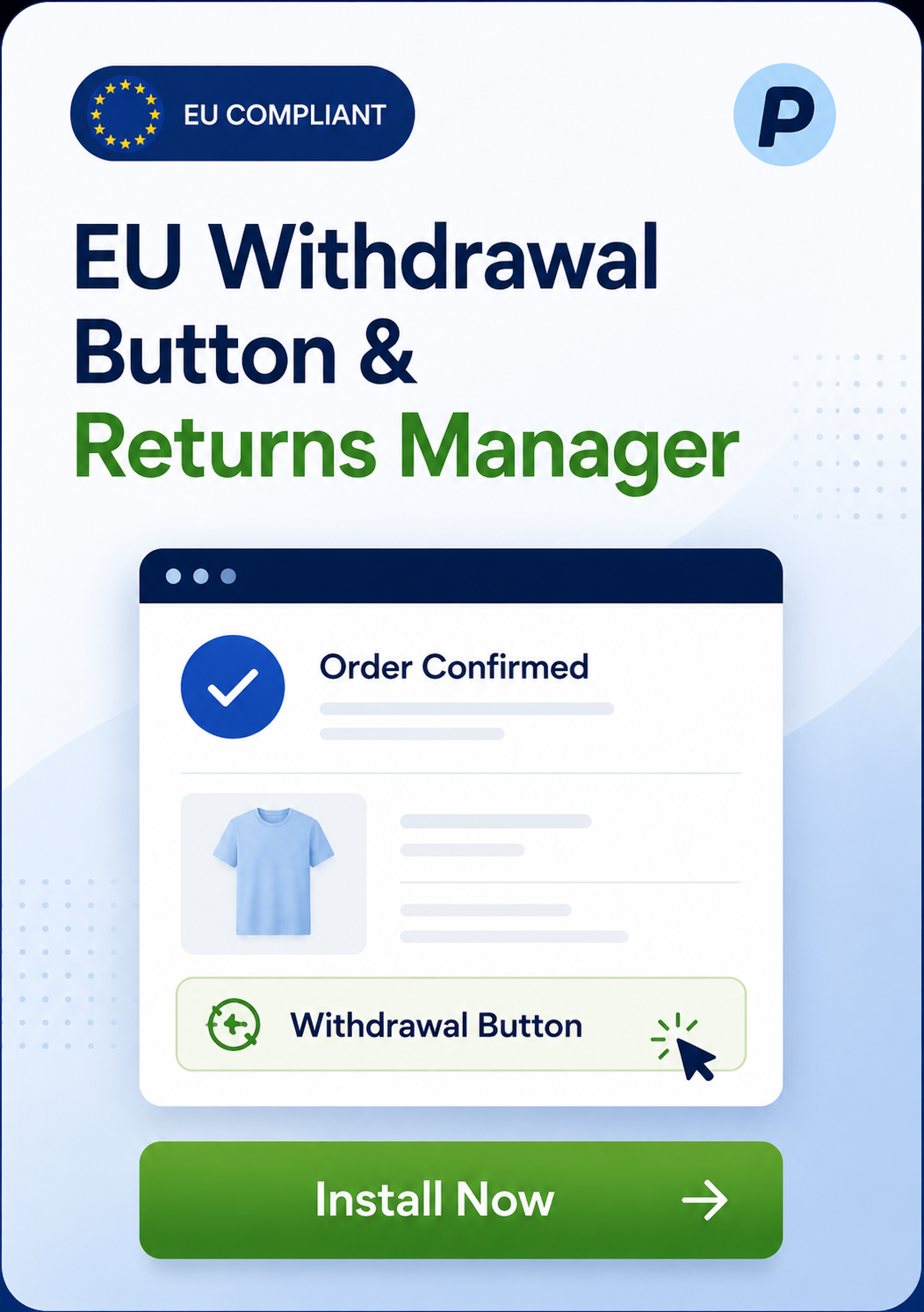
One of the most talked-about changes is the drive toward an easy-to-find EU withdrawal button. In short, buyers should be able to cancel an eligible order as easily as they placed it.
When you look at past buyer complaints, this is a direct response to shops that made buying easy while making returns hard. If you are new to this rule, start with our explainer on what the EU withdrawal button is and who must implement it.
3. Clarity Requirements
Clarity continues to be a major theme. Also, online shops are expected to be clear and upfront about the facts that affect a buying decision.
Clarity Focus Areas:
- Clear pricing, including any conditions or extra costs.
- Honest product facts and safety details.
- Plain-language policies for returns and withdrawals.
- Easy-to-find contact and business ID details.
The principle is straightforward. Yet, shoppers should never feel surprised or misled after they buy.
Before you launch a sale or promo, check that your price on the product page matches what the buyer pays at checkout. Also, hidden fees are a common source of buyer complaints.
4. Easier Returns and Refunds
Returns are a central part of the 2026 updates. Also, beyond the withdrawal button itself, regulators want the whole returns journey to be smooth and predictable.
However, that includes processing refunds within the required time window, handling partial returns correctly, and keeping clear records. For the legal basis behind the timelines, read our partner guide on the EU 14-day right of withdrawal.
In practice, a buyer who can start a return in one click is far less likely to dispute the charge. That alone can save your shop time and money.
5. How to Prepare
The good news is that preparing is mostly about tidying up processes you may already have. For this reason, here is a practical path:
Your Preparation Checklist:
- Add a visible withdrawal button to accounts and emails.
- Review your policies for clarity and accuracy.
- Automate request logging and refund tracking.
- Test your returns flow from the buyer’s point of view.
To make sure you cover every rule, work through the EU withdrawal button 2026 compliance checklist. If you are worried about timelines, our guide on the 2026 deadline and penalties explains the risks of waiting.
6. What Is Driving These Changes
It helps to know why EU officials keep tightening the rules. Since the pressure comes from a few clear directions, it pays to know them.
The Main Drivers:
- Buyer complaints: Years of reports about hard-to-use returns and hidden costs.
- Cross-border growth: More EU shoppers buy from other countries and need consistent protection.
- Digital-first selling: Rules written for older retail need updates for modern shops.
- Fairness pressure: A push to stop a small number of bad actors harming trust for everyone.
In addition, the changes are less about punishing firms and more about restoring trust in online shopping across the EU.
7. How Different Sectors Are Affected
The impact varies depending on what you sell. Meanwhile, it is worth knowing where your shop sits.
Sector Snapshots:
- Fashion: High return rates mean the withdrawal button and partial returns matter most.
- Electronics: Clear product and safety facts are under extra scrutiny.
- Digital goods: Explicit consent before access is the key compliance point.
- Subscriptions: Easy cancel joins easy withdrawal as a focus area.
For example, a fashion shop may see the button used daily, while a B2B parts seller may see it rarely. Yet, both still need to be ready when a buyer asks.
8. Mistakes Businesses Make
When new rules arrive, the same easy-to-skip errors appear again and again. For example, these four come up most often:
Avoid These Errors:
- Treating compliance as a one-time project instead of an ongoing process.
- Updating policy text but never changing the actual buyer experience.
- Ignoring record keeping, leaving no proof of compliance.
- Waiting until the last possible moment, then rushing the setup.
9. Why Records Matter More Now
Because disputes and audits happen, clear records turn stress into a quick answer. If a buyer complaint lands, you need proof of when the request arrived and when the refund went out.
Records to Maintain:
- The date each withdrawal request was received.
- The order reference and which items were withdrawn.
- The date and amount of each refund.
- A copy of your withdrawal policy as it stood at the time.
Ultimately, a good module keeps these records on its own, so you do not need a separate spreadsheet by hand.
10. A Practical 30-Day Readiness Plan
If the changes feel too much, do not panic. Instead, break them into a simple month-long plan. You do not need to do everything at once.
Week-by-Week:
- First week — Audit: Walk through your shop as a buyer and list every weak point in returns and clarity.
- Second week — Fix the button: Add or improve your withdrawal button and place it where buyers can find it.
- Third week — Update policies: Rewrite returns, withdrawal, and pricing facts in plain language.
- Final week — Automate and test: Set up request logging, then test the full flow from a real buyer account.
Spread across a month, the work is light and easy to manage. Yet, crammed into a panicked weekend before a deadline, it is stressful and error-prone.
First, pick a start date this week. Next, block one hour per day for the audit. Finally, share the plan with your team so everyone knows what is coming.
11. The Right Mindset
It is easy to see every new rule as a burden. Still, the shops that thrive treat buyer protection as a feature, not a chore.
Clear policies, honest pricing, and easy returns are exactly what shoppers want anyway. When you build for the buyer, you tend to satisfy the regulator on its own.
12. Quick Answers to Common Questions
Do these changes apply to small shops? Yes. Also, shop size does not exempt you from the same easy-access rule as large firms.
Do I need the button if I only sell in one EU country? Yes. The rule applies across the EU, not just in certain member states.
Can I wait until June 2026 to act? You could, but early action avoids rushed setup and cuts your risk of fines. For timeline details, read our EU withdrawal button FAQ.
Act Before the Rush
Compliance is far cheaper and calmer when done early. Review the deadline and penalties guide and get your shop ready well ahead of any enforcement pressure.
Yet, the June 2026 EU Withdrawal Button compliance changes reward firms that treat buyers fairly. If your shop is clear, your returns are easy, and your records are clean, you are already most of the way there.


Write an article about ecommerce that help people to grow their ecommerce business. You’ll find best ecommerce guide, news, tips & more!

Leave a Reply